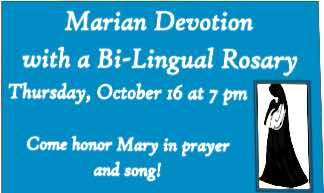
All ages are invited to attend.
Walking with one another in faith and love.
All ages are invited to attend.
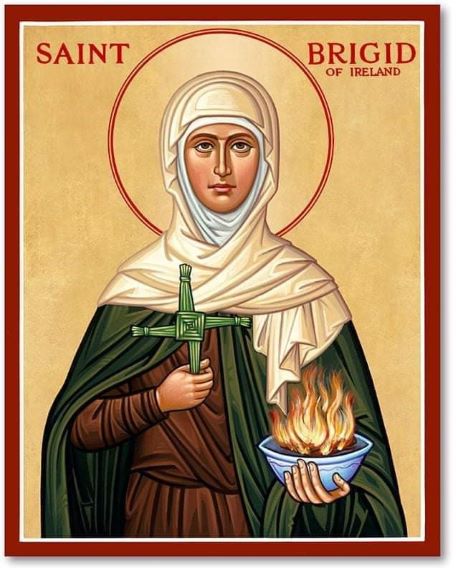
It is THIS Saturday, January 27th at 10:30 am! We are once again presenting our St. Brigid’s Day Mass at St. Peter’s R.C. Church, 104 Main Street in Danbury, CT, in partnership once again with the Danbury LAOH, Mary McWhorter division #58! Following the Mass, which will include music by our Andy McGann musicians, and prayers & readings in English & Irish, a reception will be held downstairs in the church hall, with light refreshments, a talk on the life of St. Brigid, and an opportunity to learn how to make your own St. Brigid’s Cross, which you can take home. Please RSVP to us at andymcganncce@gmail.com, so we can get an idea about how much food and craft material we will need. All are welcome to this free event!
#stpeterdanb

In the Gospel reading on Saturday, April 1st, the day be for Palm Sunday, John’s gospel (Jn11:45-56) gives us the Session of the Sanhedrin. Many members are upset to hear about Jesus’ popularity among the people and that he will be entering Jerusalem. The High Priest, Caiaphas, makes a startling prophesy!
The publication, Word Among Us, provides a Daily Meditation on the Mass readings everyday and the one on April 1st was excellent and follows here.
Daily Meditation
To gather into one dispersed children of God. (John 11:52)
Tomorrow is Palm Sunday, when we will walk with our Lord through all the events of his passion and death. And today’s gospel gives us a perfect lens for viewing those events. When Caiaphas, the high Priest, told the Jewish leaders, “It is better for you the one man should die instead of the people,” he probably didn’t fully understand what he was saying (John 11:50). But John tells us that Caiaphas had prophesied: through his death, Jesus would “gather into one of the dispersed children of God” (11:52). In hindsight, we see that this is exactly what Jesus was doing: he was gathering all people to his Father.
When he entered Jerusalem, Jesus gathered his people to celebrate God’s closeness and acclaim his kingship (John 12:12-19). In doing this, he foreshadowed the celebration of heaven, when he will gather people from every nation to worship before the throne of God (Revelation 7:9-17)
When he celebrated the Passover, Jesus gathered his disciples to wash their feet and offered them his body and blood (John 13:1-20; Matthew 26:26-28). Even more, he commanded them to “do this in memory of me” (Luke 22:19). He made a way to gather all his future disciples as well – even us! We can rejoice together at the Eucharist and proclaim Jesus’ death until he returns (1Corinthians 11:26).
When Jesus accepted Pilate’s unjust condemnation (John 19:16), he gathered all sinners to himself. By offering himself on Calvary, he took upon himself every sin so that through him, every sinner can receive forgiveness (1Peter 2:24; John 3:16).
Finally, when the risen Jesus forgave Peter’s betrayal he reestablished him as the chief apostle, the one who would continue to gather believers in Jesus name (John 21: 15-19). The Lord never stops gathering his people to himself!
As you enter Holy Week, remember that Jesus is gathering you in. He is bringing you home to his Father and to your brothers and sisters in Christ. Let him draw you close. Receive his mercy and forgiveness and take your place in his family.
“Lord Jesus, get me into your family.”
#stpeterdanb

Each year, Religious Education (RE) at St Peter Church, Danbury, CT invites people to discern if God is calling them to help in the faith formation of our young parishioners. (Spoiler: If you’ve been baptized, you’ve been called to share your faith.) Perhaps you’re unsure about what to expect or what to do. That’s normal. Maybe you’re worried you won’t know enough about your faith to share it. We can help you.
Let us allay your fears. We don’t expect you to be The Perfect Catechist. That’s not even a thing. We’re looking for parents, grandparents, singles, students, first-time catechists, long-time catechists and former catechists. We’re looking for people willing to learn and prepare, who are committed to guiding our students and who trust that God will provide what they need to be an effective leader.
We know you have doubts and questions, so consider these 8 reasons people are reluctant to step up into this role.
I wouldn’t know what to teach.
We provide a week-by-week curriculum outline and a full set of resources to help you. Our texts have complete teacher resources, lesson plans and a robust web site full of suggestions. Our experienced catechists share ideas and lesson plans as well.
I don’t know my faith well enough.
At one point, we were all on a journey to learn something – how to read, how to tie our shoes, how to do fractions – and we did it. Your faith is the same; when you practice it more actively, you learn more about it. In fact, this is the thing we hear most often from catechists – their faith grows exponentially when they teach RE.
I don’t have the time.
If you attend the 9 a.m. or noon Mass, you’re already here on Sunday mornings. Planning takes only a couple of hours during the week. Chances are you’re already online in the evening; you can surf for lesson ideas then. There are enrichment workshops throughout the year that take place right in the Diocese.
I enjoy having a quiet hour for coffee on Sunday while my kids are in class.
We get that. At baptism, you were called to be a witness to Christ’s love in the world. Serving as a catechist allows you to live out this call. Coffee and quiet are beautiful things, but the power of the Holy Spirit at work in the classroom is pretty energizing, too.
I’m afraid to teach by myself.
You don’t have to. We place two catechists in every classroom. You can choose how best to teach. Some catechists like to team-teach. We have substitute catechists if you’re on travel.
What if someone asks me a question I can’t answer?
You don’t have to know all the answers all the time. We have the people and the resources to help you find the answer so you can bring it back to class the next week.
I’m not “cool” enough to relate to students.
Our students have enough “cool” friends. What they need on Sunday morning is a committed Catholic who will learn their name, listen when they speak, involve them in a meaningful lesson, lead them in prayer and guide them on a good path. You probably have life experiences that are more applicable than you realize.
I don’t think I can manage a room of 15 kids.
Very few of our catechists are professional teachers, so everyone has concerns about classroom management. We will help you set expectations for your classroom and ensure that students and parents understand what is required for participation in our program.
Open yourself up to a new relationship with God; we’ll help you get there.
Questions? We’d love to talk with you. Call or email: 203-743-1048 or spreligioused@stpeterdanb.org.
#Stpeterdanb
Stpeterdanb.org

THE BENEDICTINE TEMPLATE has influenced Christian spirituality since the early centuries. We will look at the key elements which can enrich our spiritual lives. Join Yvette Lessard (Spiritual Director) in the Parish Hall of St. Peter Church, Main St. Danbury, CT on Thursday, July 11 from 10-11:45.
#MedievalSpirituality
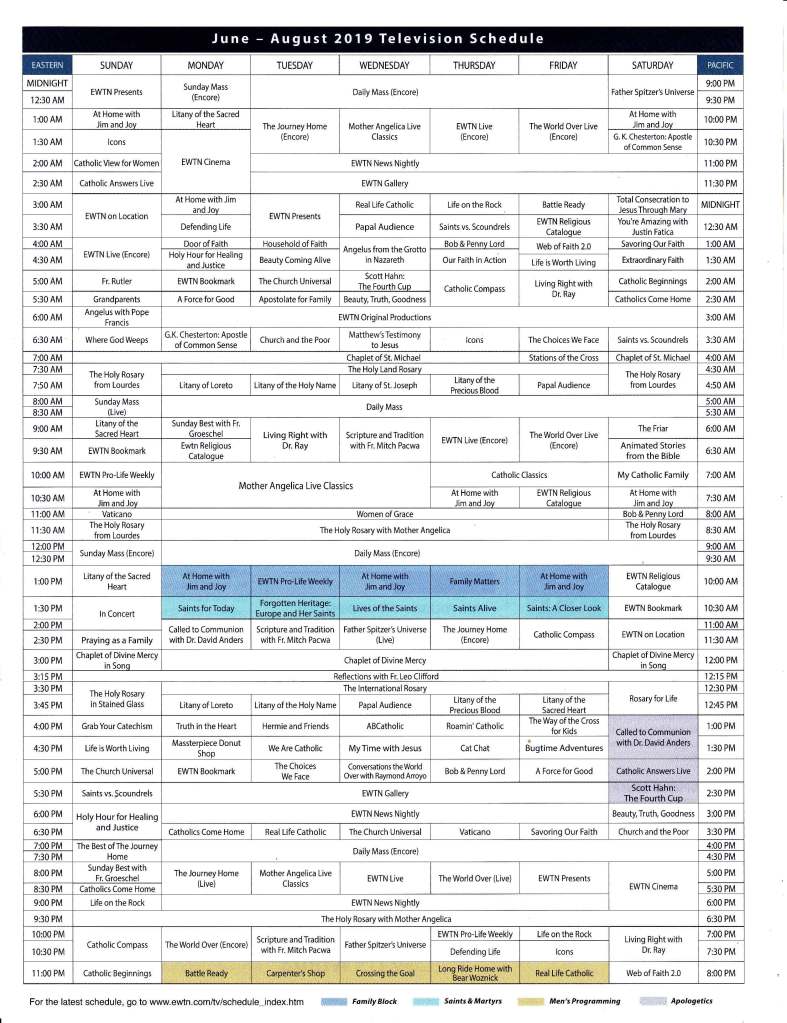
You can watch or listen EWTN through their app for your device(ewtnapps.com), find them on a local radio station (ewtn.com/radio/radioaffiliatemap) or watch through a local TV provider (ewtn.com/channelfinder)
Watch EWTN News Nightly for news from a Catholic perspective that you will not see on the major networks.

#ewtn
#TolkiensChristian

The revelation of Jesus Christ. (Revelation 1:1)
Have you ever wondered what the Book of Revelation is about? You’re not alone. This book has baffled, bedeviled, and frightened readers for centuries. That’s mainly because the Book of Revelation is a different kind of writing that we’re not too familiar with in the twenty-first century.
Revelation is a prime example of “apocalyptic” literature. That means it uses dramatic imagery—cosmic signs and fanciful creatures—to interpret present-day events. In the case of this book, it is an interpretation of the readers’ own challenging situations: persecution, false gospels, complacency, and general hardship.
But that’s only one part of the picture. The overall goal of Revelation is to reveal Jesus himself, the One whose kingdom can withstand any challenge or hardship. It’s an unveiling—a throwing back of the curtain around heaven.
From now until Advent begins, the Church’s liturgy will feature readings from this beautiful but puzzling book. These readings will unveil a truly awe-inspiring Jesus. You’ll see him take his throne on a seat of glory. You’ll see him surrounded by myriads of worshippers crying, “Holy, holy, holy” (Revelation 4:8). You’ll even hear him speaking from heaven as he tells you that he has come, not only to destroy the old reign of sin, but also to “make all things new” (21:5).
For the next two weeks, begin each prayer time by asking the Holy Spirit to open your eyes so that you can see Jesus in the passages you will read. Then read through them. Don’t be afraid to use your imagination. Go ahead and picture the scenes. Imagine yourself actually in them. Let those pictures draw you into worship. If you find yourself struggling amid unfamiliar signs and symbols, that’s okay. See if you can find a commentary in your Catholic study Bible that might clarify these images for you. Footnotes can provide context or help you understand what the images mean.
Finally, trust that God is going to bless you. After all, he said, “Blessed is the one who reads” (Revelation 1:3)! Let this fantastical imagery help you imagine Jesus’ majesty. Let it convince you that no matter what life throws your way, Jesus is on his throne and in control.
“Holy Spirit, open my eyes to see the glory of Jesus.”
#UnderstandRevelation
#StPetersDanbury
Published by Word Among Us – 19November 2018

For the past two years, I have been working a job that has required a daily commute of roughly two hours, more or less. Over time, it has slowly worn on me, not to mention my cars. It not only has had its effects on me, but my wife and my son also feel the impact of my long absence.
I’ve written and lamented in the past on how crucial it is for fathers to be home with their families as much as they can, and I very much still stand in that favor of that position. The absence of the father in a home can be very noticeable if we just observe.
On days when I’m able to show up at home immediately following a day’s work and I get to interact with my wife and son, the family feels more stable and the evening has a better flow to it. If I come home but I don’t interact with them, I find the tension gets high, and so do frustration levels (understandably so).
Most noticeably is the change in my son’s behavior when I can get home and just playwith my little guy. When I’m able to come home and get straight to playing, wrestling, rough-housing, or what have you, the evenings always go much smoother, my son is better behaved, and my wife is much happier and at ease and can relax a little.

In my own family, we have recognized how essential it is for me to get home and give my son my undivided attention and simply play with him. The difference in his behavior is night and day when I get to spend uninterrupted time with him versus when I don’t. Because of the noticeable difference and the desired result of a smoother evening, we’ve put rules in place where I put phones away and remove any other distractions for at least the first 30 minutes (or more) of my time in the evening and I focus entirely on my little boy. He has waited all day to see his ol’ man. I’ve had to wait too.
When we take these measures as fathers to give of ourselves entirely to our wives and children and set aside things that call our attention, I find that we live lighter and more freely. By engaging in selfless play with our kiddos, we show them the love of the Father and give them the confidence and assurance they need that they are deeply a part of us, and that we love them in a way they cannot fully understand.
This, I believe, will dramatically affect the way they relate to our Heavenly Father. We dads here on earth have an opportunity to help our children engage in receiving the love of our Father. Many times, I have met Christians who speak incredibly highly of their fathers and how impactful that relationship was to receive the Divine Love. I have also heard the reverse, of how a poor relationship with a father (or lack thereof) has led to an abandonment of the Lord. What a beautiful opportunity for us, but also, how intimidating!
Playing with your child is a gift. Play is done not as a means but as an end unto itself; it’s done for the sake of itself. Playing with our children reminds us to let go and enjoy the gifts that the Lord has given us, namely our children. To hear the laughter of your child as you play-tackle him to the ground, is one of the finest treasures in our lives as fathers.
The post Be a Father Who Plays appeared first on Those Catholic Men.

Cameron hails from the Peoria diocese originally, but now resides in St. Louis with his wife and son. Cameron works as a project manager by day, and teaches Spanish on the side. He is an aspiring homesteader and writer and God willing, hopes to run a small farm in the future. He is also the editor of a blog geared toward Catholic masculinity called The Seasick Catholic (www.seasickcatholic.wixsite.com/sscatholic)



 Seeking Jesus in Danbury