
It may not feel like it but Easter is with us still even though Easter Sunday (April 12th) was over five weeks ago! Even in spite of pandemics and whatever. The Ascension of our Lord will be observed on May 21st and Pentecost Sunday on May 31st a full 50 days after the Resurrection. This period of time being Eastertide. Although the weeks after Easter Sunday seem to be a very quiet time in the life of the Church, it is anything but.
This is the time period when the Apostles are transformed from a frightened group of disciples who abandoned Jesus as He awaited trial into a group of bold, passionate missionaries who defy the same religious authorities that killed Jesus and proclaim Christ as Messiah to all! Look at what they experience after Mary Of Magdala first reports the empty tomb to them (Jn 20: 1-10) and Peter and John run to see for themselves. Imagine the shock and confusion that confronts them when they see that Jesus’ body is not there!
After Peter and John leave, Jesus appears to Mary while she is still weeping (Jn 20: 11-18). Christ appears to two men as they travel to Emmaus (Lk 24: 13-35). The risen Christ then appears to the disciples behind locked doors (Lk 36-49 and Jn 20: 19-21A). A week later, Christ appears again to the disciples, this time showing His wounds to Doubting Thomas (Jn 20: 24-29).
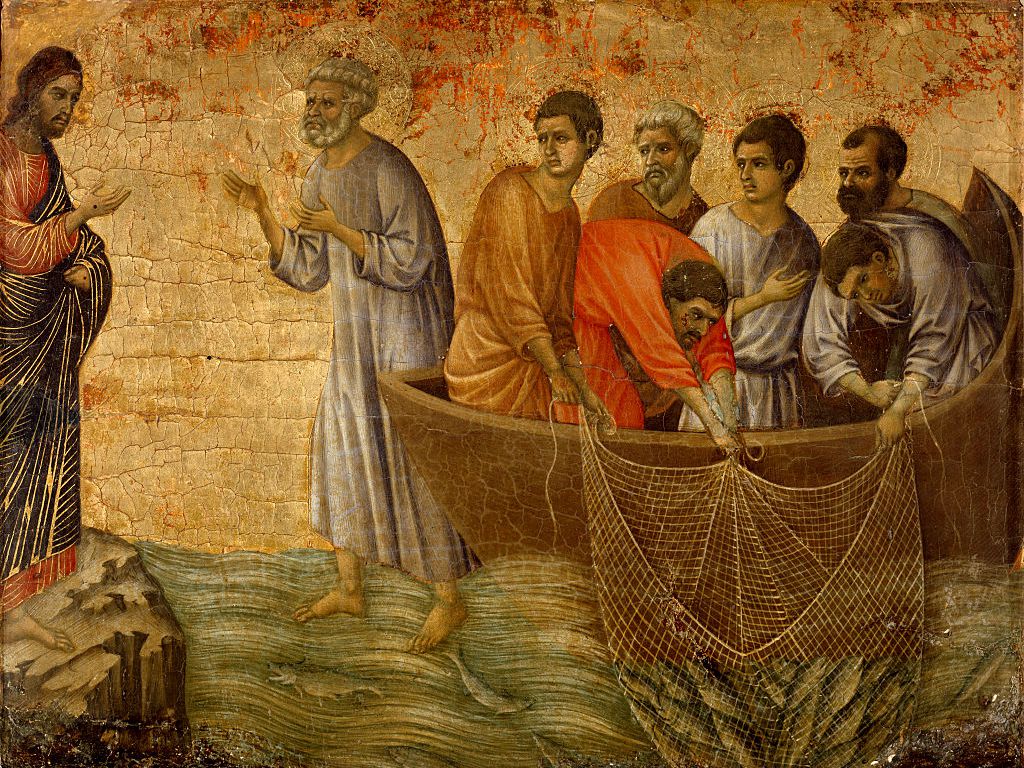
Later on, Christ appears to the disciples on the shore of Galilee while they are fishing one morning. He offers them some breakfast that He is cooking on the shore of which they partake (Jn 21: 1-14). Afterwards, He questions Peter three times if Peter loves Him (Jn 21: 15-19) . At another time, Jesus arranges to meet them on a mountain in Galilee where He instructs them to make disciples of all men (Mt 28: 16-20). Jesus speaks with them over a forty day period telling them to stay in Jerusalem until they are baptized by the Holy Spirit (Acts 1: 4-5).
When they had gathered together again, He told them “ …you will receive power when the Holy Spirit comes upon you, and you will be my witnesses in Jerusalem, throughout Judea and Samaria, and to the ends of the earth.” (Acts 1: 8). With that He ascended into heaven before them. Finally, a few days later when Pentecost came, they were all gathered in one room when the noise of a strong, driving wind filled the room and there appeared like tongues of fire which appeared over each one of them. They were filled with the holy Spirit and began speaking in tongues to all those around them so that each could understand them in their own language (Acts 2: 1-11).
No, the Easter season was not a quiet time. It was an explosion of spiritual transformation for humanity! Resurrection from the dead! Appearing to hundreds of people….loving everyone, even your enemies!! No, this isn’t a quiet time, business as usual. From that first Eastertide, life has never been the same.
Every morning I read the Daily Readings for Mass that day and for the past several weeks since Easter Sunday, I read passage after passage taken from the Acts of the Apostles which covers the time period immediately after Pentecost detailing the dramatic shift in the hearts and souls of the Apostles. In Acts 3, Peter cures a beggar crippled from birth at the Beautiful Gate of the temple. Afterwards, he speaks boldly about Christ to the crowd who were amazed by this miracle.
The captain of the temple guard and Sadducees came and arrested them for curing the crippled man and preaching about Jesus. The next day they are brought before the Sanhedrin and asked in whose name have you done this? Peter’s response “….it was in the name of Jesus Christ the Nazorean whom you crucified, whom God raised from the dead; in his name this man stands before you healed.” Not sure what to do since the crowd there saw the healing, they ordered the Apostles not to speak or preach in the name of Jesus and released them.
The Apostles continue their preaching and healing and bringing many people into their community of believers. In Acts 5, they are again arrested and thrown into jail by the religious authorities. That night an angel of the Lord opened the cell telling them to return to preaching in the temple which they do. In the morning when the Sanhedrin convenes for their trial, the captain of the guard cannot find the Apostles in prison. They then hear from someone that they are back in the temple preaching again! The temple guard brings them back to the court and the high priest questions, “We gave you strict orders to stop preaching in that name….”. Peter (the man who denied even knowing Jesus before his trial) and the apostles replied, “We must obey God rather than men. The God of our ancestors raised Jesus, though you had him killed by hanging him on a tree…” Needless to say, the Sanhedrin is infuriated by this and want to put them to death!
At this point, a respected teacher of the law in the Sanhedrin, Gamaliel, stands up and orders the men to be put outside for a short time. He then warns the members of the Sanhedrin to be careful about how they deal with these men. He reminds them of two other false leaders with large followings who were killed and their followers disbanded and came to nothing. Gamaliel tells them to have nothing to do with these men and let them go. If the activity of these apostles is of human origin, it will destroy itself. But if it comes from God, you will not be able to destroy them and you will find yourself fighting against God!! The Sanhedrin hears his words and are persuaded. The Sanhedrin have the apostles flogged, order them not to preach in the name of Jesus and then release them. They went home rejoicing that they had been found worthy to suffer for His name.
Outright persecution begins in Jerusalem against the Jewish Christian community which has been growing. In Acts 6, St Stephen is stoned to death as he forgives his killers. Acts 10 shows Peter wrestling with the idea of allowing Gentiles to be part of the Christian community. This is resolved when Peter receives a vision that tells him that God does not withhold divine favor from other people outside of Israel. This persecution actually increases the spreading of Christianity as those scattered by the persecution now carry the word to Antioch where another large community of believers is established.
With chapter 9 of Acts, comes a major surprise that does not involve the original Apostles and that man is Saul. Saul happens to be the most ferocious and zealous persecutor of believers in the Way. He was involved with the stoning of St Stephen and now is obtaining letters from the high priest to bring back in chains any men or women who belong to the Way in Damascus. On the way to Damascus, a brilliant light flashed knocking Saul off of his horse and blinding him! A voice heard by everyone there says:”Saul, Saul why are you persecuting me?” When Saul asks who is this, a reply comes:”I am Jesus, whom you are persecuting. Now get up and go into the city and you will be told what you must do.” There in Damascus he becomes a disciple, his sight returns and he becomes one of the prominent evangelizers of Jews and Gentiles! Now known as Paul, his writings make up most of the New Testament (about 93 pages). The rest of the chapters in Acts from 10 thru 28 concern Paul’s preaching in Jerusalem, Asia Minor, Greece, Europe and Rome. The change from ferocious persecutor to a zealous preacher of Christ is as dramatic as Peter’s change from one who denied even knowing Christ to a zealous preacher himself. All of Christianity descends from the evangelizing action of these twelve men with God’s grace active in them!
No! As we can see, this is not a quiet time historically for the infant Church! Unfortuntely, all this action and activity are not part of the Sunday readings but a part of the daily Mass readings each day during Eastertide. This is not to minimize or make light of the readings in the Sunday Masses which have major significant meaning for our relationship with God. It is just that these readings do not highlight the dramatic and enormous changes in the Apostles because of the astounding experiences they had with Jesus and God’s graces. This also shows the importance for a follower of Jesus to be reading Scripture outside of what is heard at Sunday Mass. The appreciation of the effects and drama of Christ’s Coming cannot be fully realized without it.
The Acts of the Apostles, in its entirety, is only about 38 pages long. Not a lot of material to read. One could do it in an evening. You will spend a lot more time pondering on what it says and what it means for the rest of your life but it isn’t a long read. I urge you to do so. When you think of it, the entire New Testament is only about 298 pages. How many books have you read that were longer than this? The entire Old Testament is about 1100 pages. When you spend regular time learning more about your faith (Bible study, retreats, books, lectures) than only attending Sunday Mass, you will become a happier and more joyous person and will come to know what Jesus meant when he said “I am the Way, the Truth and the Life”.
@StPeterDanbury1
@Eastertide
@Pentecost






 Seeking Jesus in Danbury